
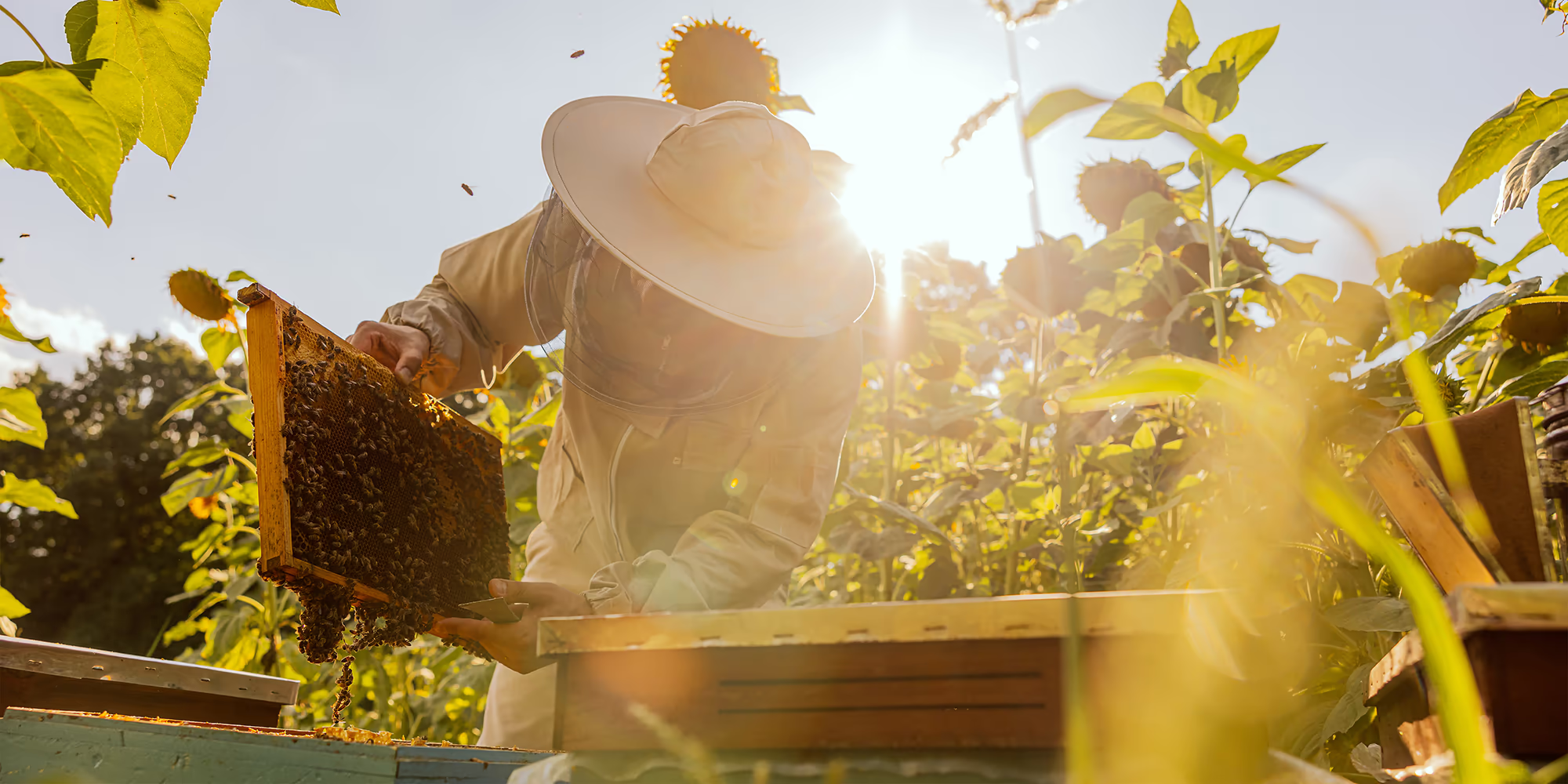
Ecological and economic importance of beekeeping: Responsibility and enjoyment
Thanks to modern beekeeping, it is possible to produce honey in large quantities and high quality. This requires professional expertise: In addition to harvesting the honey, beekeepers look after the bee colonies with precise care combined with extensive experience and support their development, in particular during the winter months.
However, the role of beekeepers and their bees extends far beyond the production of honey. They are essential for agriculture, as sufficient pollination by bees is the fundamental requirement for good harvests. Furthermore, bees also contribute towards the pollination of wild plants and therefore play an important role in nature conservation.
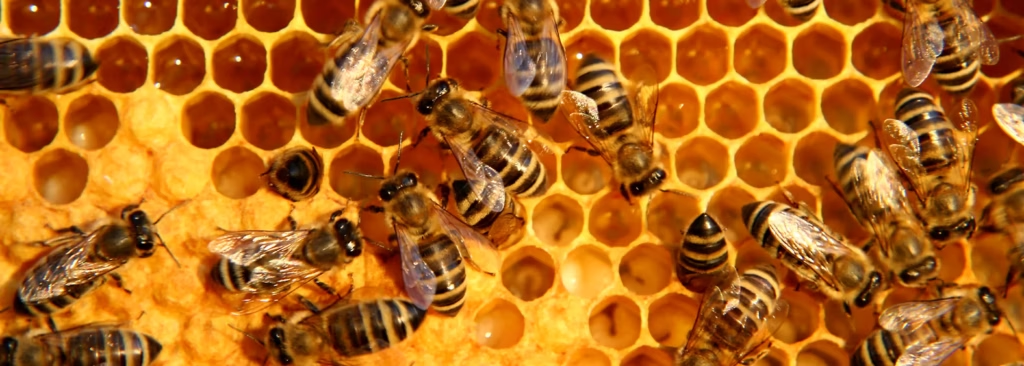
How is honey created? The production of honey begins with the forager bees, which collect nectar from flowers or honeydew from leaves and needles. Using their long proboscis, they draw up these substances and mix them with saliva secretions as they ingest them. The nectar absorbed in this way is stored in the bees’ honey bladder.
Back in the hive, the forager bees transfer the watery nectar to the hive bees. These store the nectar in honeycombs and extract water from it by repeatedly sucking it up and releasing it, combined with ventilation resulting from wing movement. The temperature in the hive, which is between 30 and 35 °C, also promotes the reduction of the water content.
The bees’ enzyme-containing salivary secretion catalyses the conversion of the polysaccharides contained in the nectar into monosaccharides, primarily fructose and glucose. As a result of this biochemical process, the nectar gradually matures into honey. As soon as the honey has reached the desired maturity, the bees seal the filled combs with a wax lid, signalling to the beekeeper that the honey can be harvested.
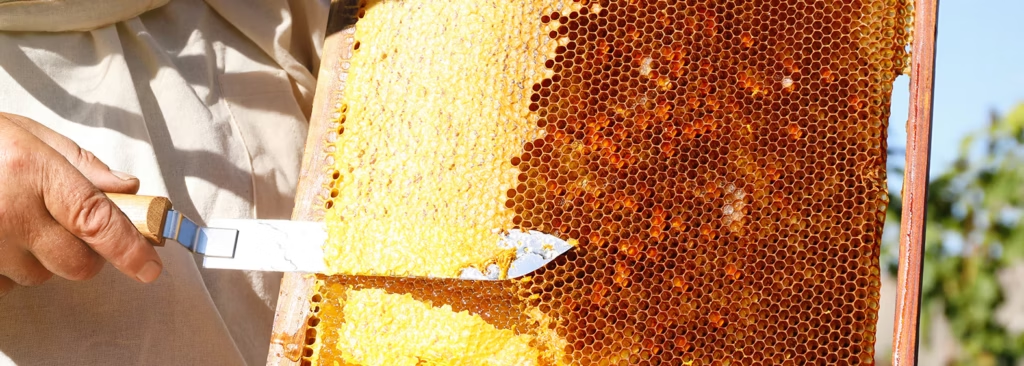
What tasks does a beekeeper have? Beekeepers have a wide range of tasks throughout the year. One important activity is the honey harvest. This begins with the removal of the honeycomb frames. After removing the wax caps, the combs are then spun in a centrifuge to extract the honey. Subsequent sieving removes impurities such as wax residues and plant particles, following which the honey is filled into jars.
Furthermore, in addition to the honey harvest, continuous monitoring of the bee colonies is necessary. This allows the health and development states of the bees to be assessed. If necessary, colonies are divided in order to optimise their development. Targeted breeding is, however, usually reserved for specialised apiaries and beekeepers.
Keeping a watchful eye on the weather conditions and the flowering period in the surrounding area is also absolutely crucial. This enables beekeepers to recognise which yield the bees are gathering. In autumn, the bees are provided with pre-wintering food in order to ensure their survival during the cold season. In addition, the beehives are maintained and winterised.
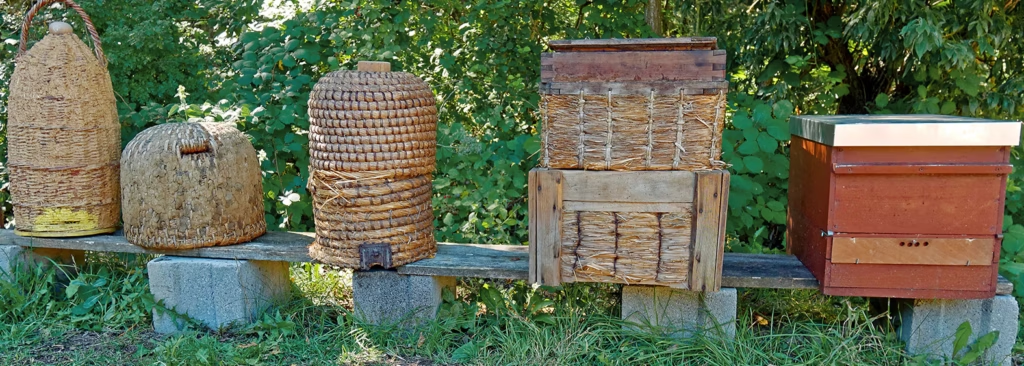
Where and how do bees live? In ancient times, bees were already being intentionally kept in hives in order to facilitate access to honey. Originally, hollowed-out tree trunks were used, which were closed at both ends with boards. These so-called “log hives” were used into the modern era and were often ornately decorated. In ancient Egypt, bees were also kept in clay tubes, while in other regions, beehives made from materials such as straw, cane or rushes were used.
However, these traditional beehives had the disadvantage that the honeycombs were an integral element, meaning that part of the hive had to be damaged in order to extract the honey.In the middle of the 19th century, beekeeping was revolutionised through the invention of so-called movable honeycomb frames. These frames enable the honeycombs to be gently removed and reutilized, making honey extraction much easier and causing less disruption to the bees.
Even more Honey Knowledge
-
Bees
-
Nutritional Value
-
Bee Products
-
Honey Varieties
-
Varroa Mite
-
Science
-

History