Scientific principles and quality control for honey
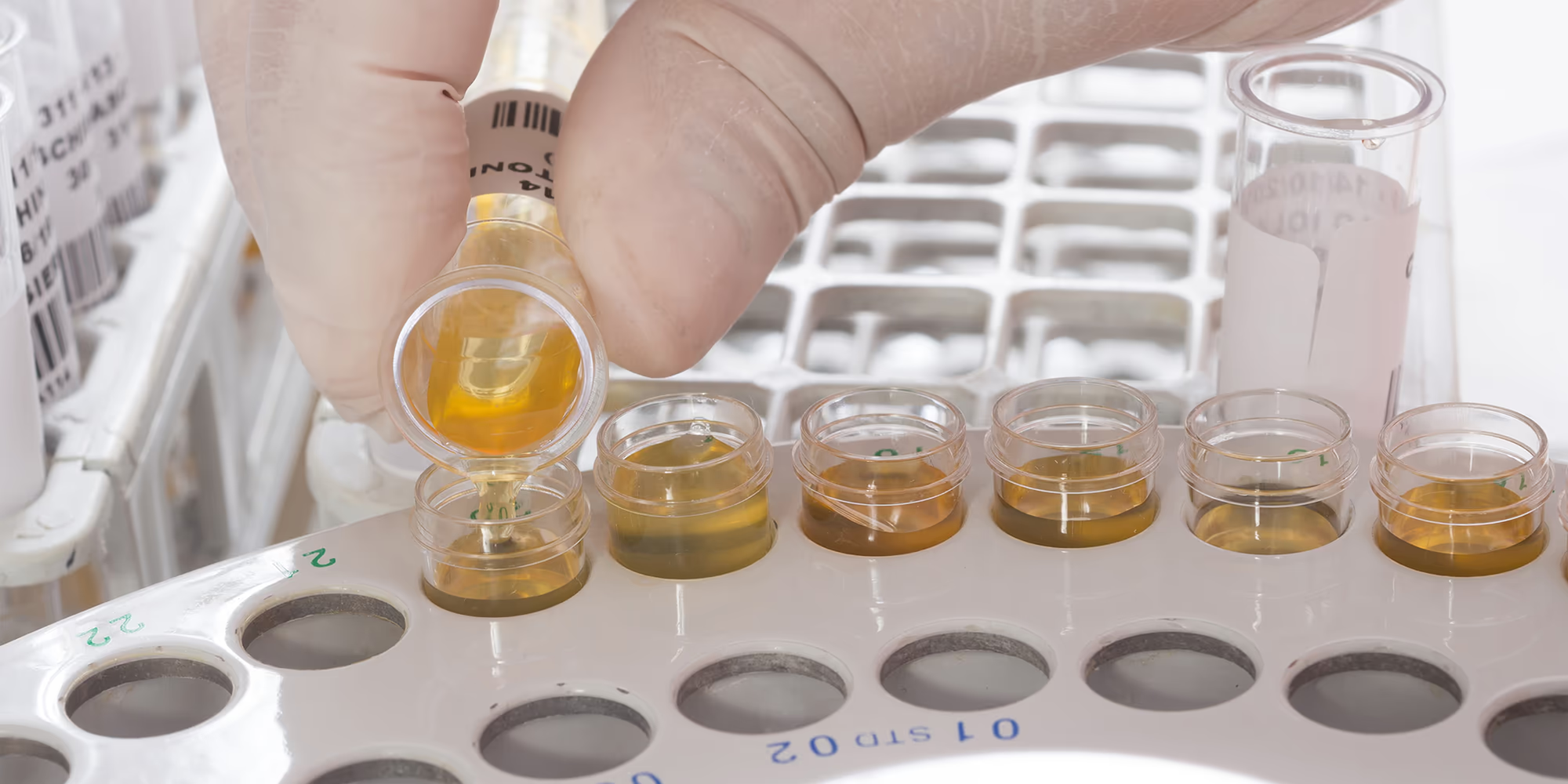
Honey is more than just a sweet treat: Thanks to a multitude of valuable ingredients, it can offer health benefits. In addition to fructose and glucose, honey contains important minerals, enzymes and inhibins. The latter are substances that inhibit bacteria and have an antibiotic effect. The quality of these ingredients is ensured through precise analyses. One of the most important methods for determining quality is HMF analysis, which measures the preservation of the nutritious ingredients. Further essential elements of quality control encompass pollen analysis and the determination of the glucose-fructose ratio.
BIHOPHAR honeys are subject to a three-stage control process: Prior to shipping, upon arrival and before bottling, honeys are tested with regard to taste, aroma, colour, purity and consistency. In addition, food-analysis parameters of the Honigverordnung (German honey ordinance) and the Lebensmittelgesetz (German food law) are monitored. The verification of authenticity and varietal purity as well as the detection of pesticides and insecticides are integral components of quality control. Only honeys that achieve a flawless analysis by an independent, state-certified institute for honey analysis are subsequently offered for sale. Each jar of BIHOPHAR honey is fully traceable by means of a quality control number and a best-before date on the label.
What ingredients are contained in honey? Honey contains a multitude of ingredients that account for its health benefits. Despite a protein content of less than 0.5 percent, more than 120 flavourings and organic acids enrich its flavour and aroma. Honey is also rich in minerals such as potassium, calcium and magnesium as well as trace elements such as iron, copper and manganese. This composition varies depending on the type of honey. Vitamins are also present in small amounts, including vitamin C and various B vitamins such as B1, B2, B6, biotin, pantothenic acid and folic acid. Furthermore, honey contains hormones and numerous enzymes which are responsible for, amongst other things, crystallisation. Inhibins in honey suppress the growth of bacteria and constitute a particularly valuable component.
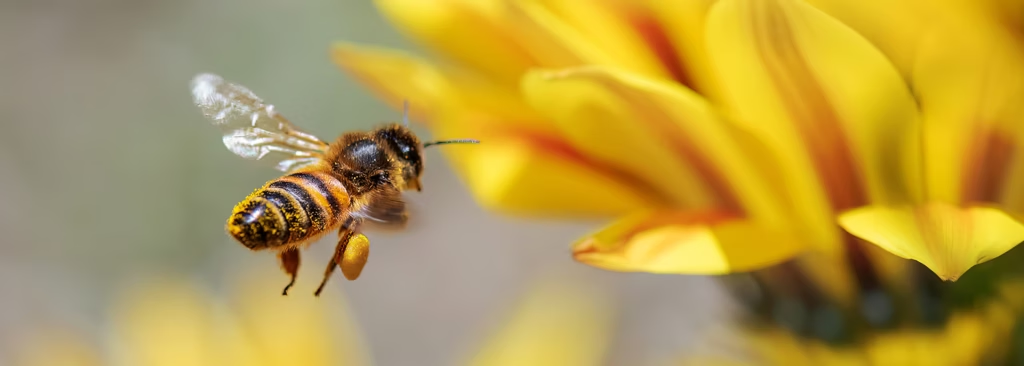
How does pollen analysis work in the determination of the origin of honey? Pollen analysis is used to determine the botanical and geographical origin of honey. Flower pollen enters the honey through the bees’ hair coat and provides information on the plants that were visited. This analysis enables precise identification of the plant species and their geographical origin. Each pollen grain is different, making it possible to define a distinct allocation.
How are HMF analysis and diastase index utilised for quality assurance of honey? The HMF analysis and diastase index are indicators that show whether the honey has been heated excessively. In order to preserve the valuable ingredients, BIHOPHAR honeys are cold extracted, gently sieved and carefully bottled.
HMF (hydroxymethylfurfural) is formed during heating and long storage; fresh honey contains hardly any HMF. The German honey ordinance stipulates that the HMF content must not exceed 40 milligrams per kilogramme of honey, and only 15 milligrams if the diastase value is naturally low. Diastase, an enzyme in honey, is damaged by heating, as a result of which the diastase count drops. These values are assessed in our in-house laboratory and by food-testing authorities. Only honeys that fulfil these strict criteria are released for bottling. This guarantees that the valuable ingredients in BIHOPHAR honeys are optimally preserved.
Even more Honey Knowledge
-
Bees
-
Nutritional Value
-
Bee Products
-

Honey Varieties
-
Varroa Mite
-

Beekeeping
-

History