From the blossom to the jar.
Good honey is created through a fascinating process. From the collection of the nectar to the finished jar, we ensure that the quality is consistently correct. Through gentle bottling, strict controls and partner beekeepers who know their trade, we preserve the natural character of the honey. Here you can find out about the various stages that it goes through.

Everything starts with nature.
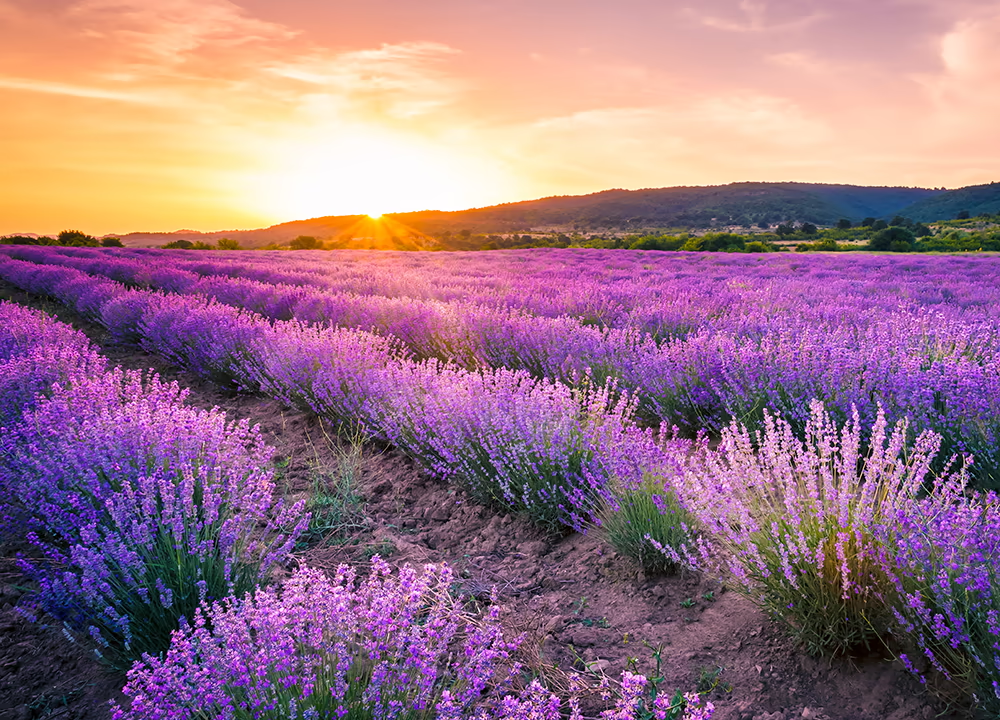
Every landscape has its own botanical signature, which determines the subsequent character of the honey. Whether it is the bright yellow rapeseed fields of Northern Germany, the white-pink flowering Manuka bushes of New Zealand or the vast orange groves of the Mediterranean: The respective flora always determines the appearance and flavour of our honeys.
The bees usually collect nectar from the calyxes of flowers such as sunflowers, orange blossom or rapeseed. This often results in pale colours and floral aromas. In forests, in contrast, bees find honeydew on the needles and leaves of trees such as fir, spruce, pine or oak. Honeydew is the basis for our dark, strong forest honeys.
When visiting the flowers, the bees pollinate the plants and collect pollen as a source of protein for their colony. As a result, the pollen is incorporated into the honey and can later be used to determine its precise origin.

A fascinating process.
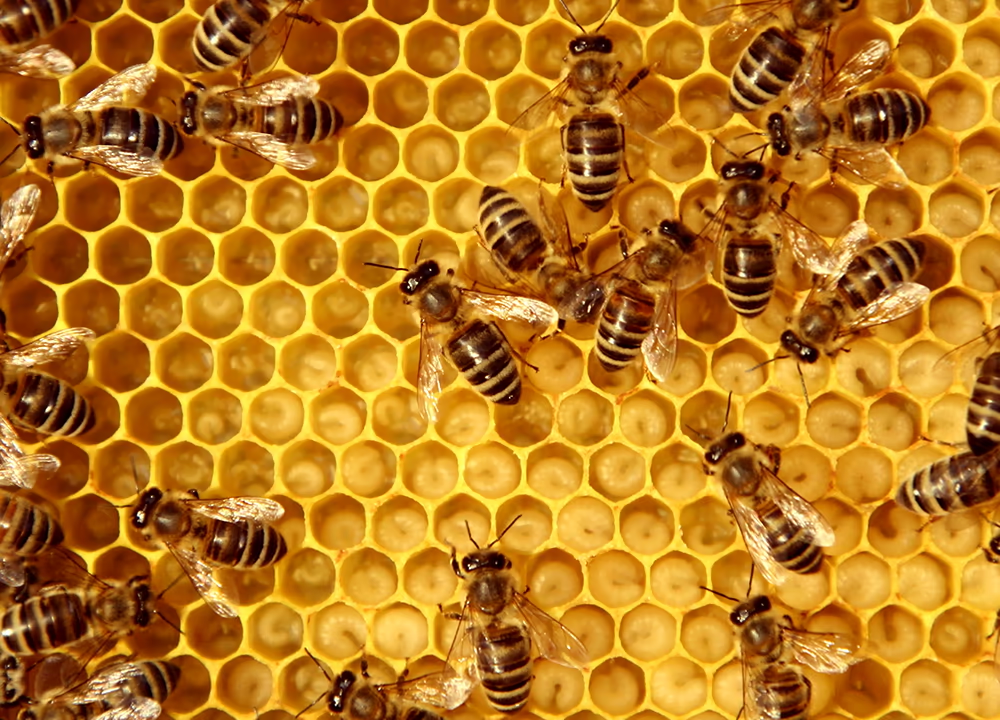
In a bee colony, thousands of female worker bees work together in an organised system. “Forager bees” suck up the nectar or honeydew and transport it to the hive in their honey bladder. There, a fascinating process begins: They transfer the juice to the “hive bees”. These enrich the nectar with enzymes and organic acids whilst constantly transferring the honey from one honeycomb cell to another. In doing so, they ensure the “drying” process: by intensively fanning the honey with their wings, they extract water from the nectar. Only when the honey is sufficiently dry do the bees close the honeycomb cells with a wax lid. This is the signal for the beekeeper that the honey is ripe.
A very special substance is produced for the queen: royal jelly. This nutrient-rich larval food is produced by the nurse bees. Whilst honey is the “bread” for the colony, royal jelly is used solely for the rearing and nutrition of the queen bee.

Experience and caution.
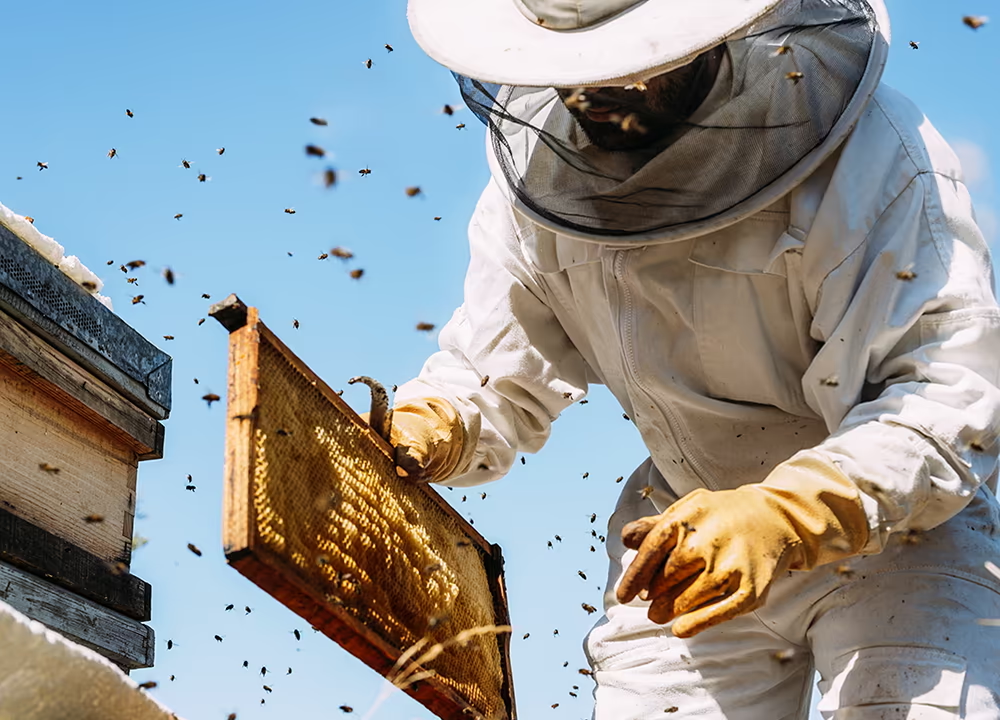
Harvesting requires careful timing. The experienced beekeeper verifies that the bees have completely sealed the combs with a wax lid. This “capping” guarantees that the honey is ripe and that the water content is sufficiently low for it to keep naturally.
The beekeeper carefully removes the combs in which the honey is stored and gently removes the wax layer. The honey is then extracted. Physics helps here: The honey flows out of the cells through centrifugal force alone – without heating. This “cold extraction” is crucial in order to preserve the sensitive enzymes, vitamins and flavour of the honey.

We preserve naturalness.
Once it has arrived at our family business in Braunschweig, the honey is checked again for purity. It is then given its final polish without losing any of its natural flavour. The honey is sieved before it is filled into the jar. By doing so, we remove the remaining wax particles but preserve the microscopically small pollen grains. These are crucial: In the laboratory, they reveal the precise botanical origin of the honey via a pollen analysis.
Then the consistency is finalised. Some honeys, such as rapeseed honey, crystallise quickly by nature. We endow them with a fine, creamy structure through slow, mechanical stirring. Others, such as fir or orange blossom honeys, remain liquid.
Following stirring, the honey rests until the last air bubbles have risen and it has clarified before it can be filled into jars. In order to preserve the enzymes and flavours, we only warm the honey to a maximum of 36 degrees Celsius prior to bottling – the temperature that prevails in a beehive.
Whether malty-spicy, minty-fresh or mild-floral: The end result is a natural product that is securely sealed and contains no additives.

Honey is a real all-rounder.
Our honeys offer you moments of pleasure that will delight you. Every jar of BIHOPHAR honey contains quality that you can see and taste. The range is as fascinating as nature itself: Discover the spectrum from almost white, creamy rapeseed honey, through golden-yellow mountain-blossom honey, to almost black, liquid fir honey. Each spoonful tells the story of its origin.
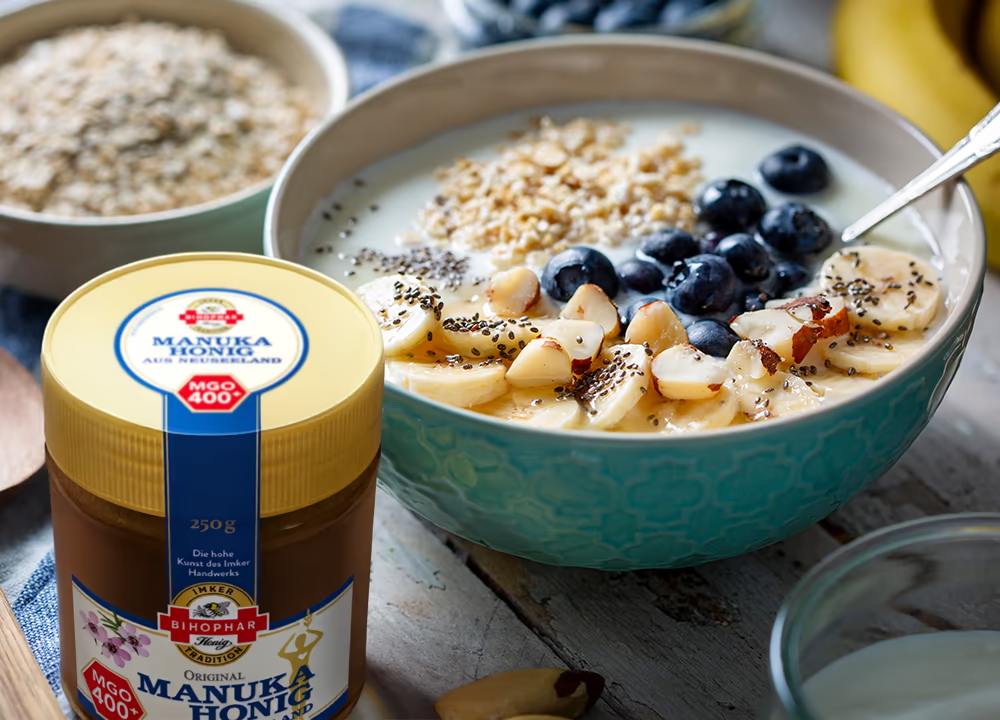
Whether enjoyed classically on a Sunday bread roll, as a natural sweetener in tea and muesli or as a secret ingredient for salad dressings, glazes and cocktails: Honey is an all-rounder.