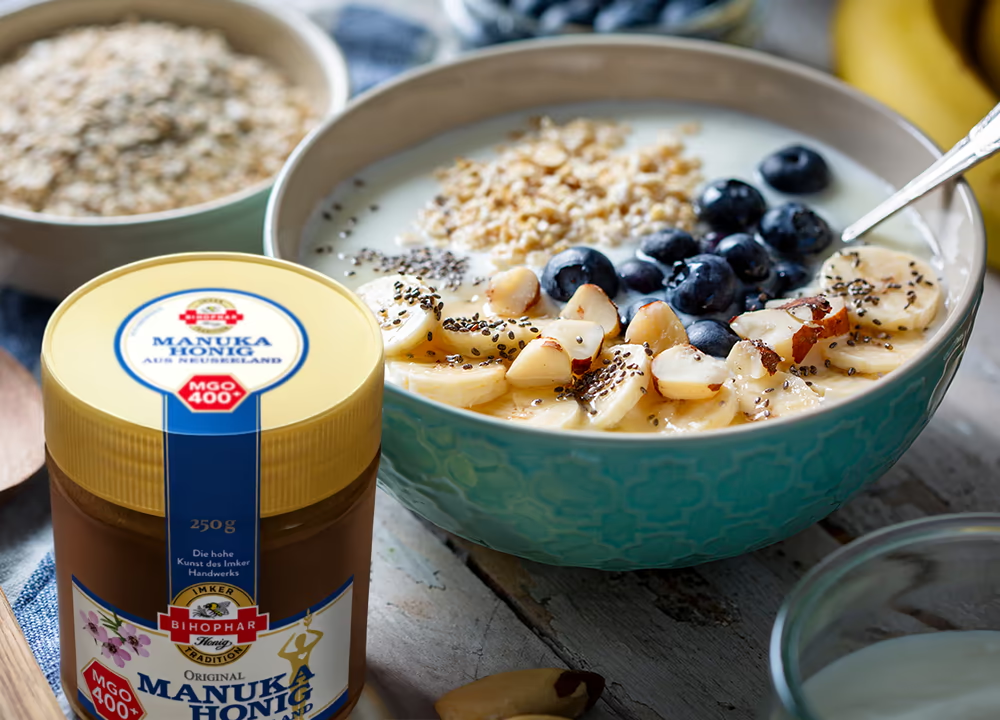
A look at our harvesting areas in Europe.


The beekeeper’s craft in the Balkans
In the rural regions of Bulgaria, beekeeping is widespread, practised by families living in the valleys of the Balkan or Rhodope Mountains. Far away from agricultural activity, our partners manage their apiaries in harmony with the rhythms of nature. The craft of beekeeping in Bulgaria is a proud tradition.
Valley of herbs
Bulgaria is one of the most biodiverse countries in Europe. The mountainous regions in particular are famous for their wild herb meadows. In addition, there are vast sunflower fields on the plains, and dense oak forests, which provide valuable honeydew during hot summers.
Rich diversity
For us, Bulgarian honey is synonymous with authenticity. We appreciate the aromatic herbal honeys that capture the essence of the mountain meadows. They form an integral part of our selection for compositions with a strong character.

Savoir-vivre in the beehive
In France, honey is treated like fine wine: it is all about the “terroir” – the interplay of soil, climate and craftsmanship. French beekeepers are masters at bringing out the subtle nuances of their regions. Whether in Provence or the Pyrenees, beekeeping here is often a passion practised with great pride in one’s own regional identity.
Lavender and sunflowers
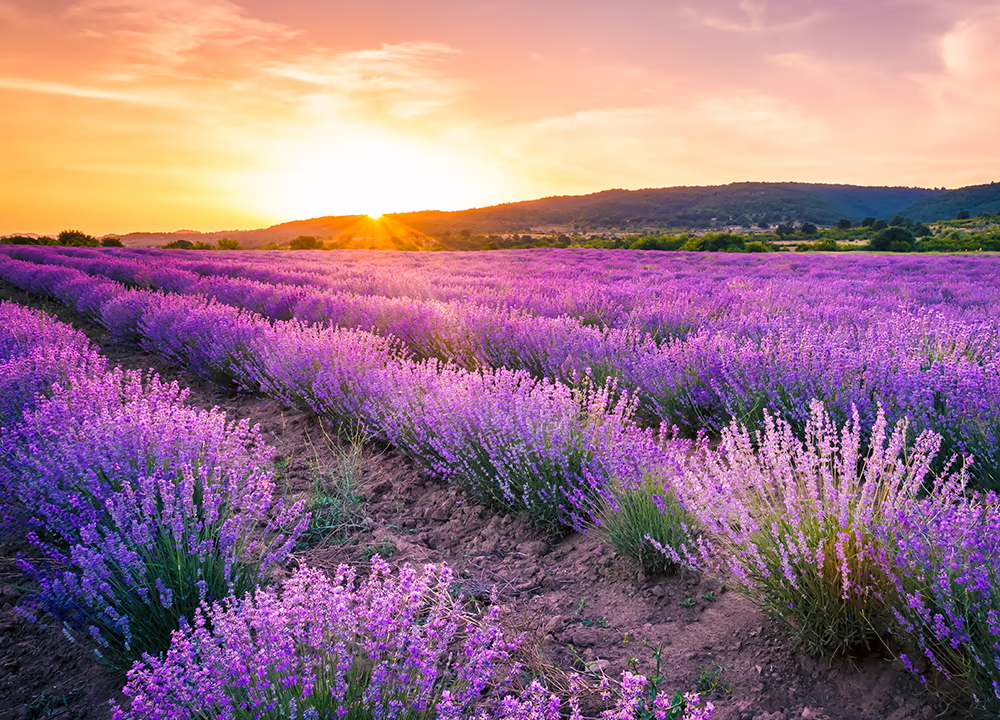
The landscapes of France are iconic. The violet lavender fields of Provence, which exude their fragrance in summer, are world-famous. In the west and centre of the country, vast fields of sunflowers (“tournesol”) glow, whilst in the forests, sweet-chestnut trees bloom. This botanical diversity allows the bees to gather nectar of the highest quality.
Aromatic elegance
From the south of France, we source honeys that captivate with their elegance. This honey, characterised by sunflowers, lavender and herbs, with its typical yellow colour and hearty, aromatic flavour, is a classic. With its delicately creamy texture, it delights every honey connoisseur.

A legacy of antiquity
Greece is the country in which Aristotle himself researched the life of bees. Here, the craft of beekeeping has a history stretching back millennia. On the islands and in the mountains, the colourful beehives can still be seen today, often moved in a nomadic fashion: Greek beekeepers follow the flowering seasons from the coasts up into the cooler mountainous regions.
Pine trees and thyme
The Greek landscape is rugged, rocky and fragrant with resin and herbs. The most important source of honey here is not blossoms, but the forest: around two-thirds of the Greek harvest consists of honeydew honeys, predominantly from pine and fir trees. On the slopes close to the coast, wild thyme and other herbs also grow, yielding what is arguably the most famous honey in the Mediterranean.
Resinous and spicy
Greek honey is unmistakable. It is usually dark and flowing, and tastes not just sweet, but malty, spicy and slightly resinous. It lends our blends body and depth. Those seeking to savour the sun and herbs of the south will find them in these honeys. They are considered a delicacy, particularly when paired with Greek yoghurt.

A passion for quality
In Italy, food is a way of life, and that applies to honey, too. Italian beekeepers (“Apicoltori”) are deeply committed to the quality of their products. They are often small-scale operations that regard beekeeping as an art form. Migratory beekeeping is particularly widespread here: Beekeepers travel with their colonies from the citrus plantations of the south to the Alpine meadows of the north.
From Sicily to South Tyrol
Italy’s flora is as diverse as its geography. In the south, the beguilingly fragrant blossoms of orange and lemon trees dominate. In Tuscany and the north, the bees find vast stands of chestnut and oak trees. The blossoms of the macchia and the Alpine flora also contribute towards this diversity.
Rich in character
Italian honey brings variety to our range. We take delight in utilising the fruity notes of citrus-blossom honeys to add a fresh nuance. At the same time, the forest honeys from the northern regions – such as our BIHOPHAR Forest Honey from Tuscany – offer robust, tangy flavours that are sure to impress fans of dark honeys.

Land of bee-lovers
In the Baltic States, the craft of beekeeping enjoys a high status. In Lithuanian, for example, there is a special word for “friend” which literally means “bee co-owner” (Bičiulis). Beekeeping here is deeply rooted in a rural tradition that makes the most of the intense northern summers.
Nordic ambience
Baltic nature is characterised by cool landscapes. Here, unspoilt mixed forests, moors and vast meadows still exist. Typical nectar-producing plants include rapeseed, clover, raspberries and buckwheat. As a result of the long days of the Nordic summer, the plants flower briefly but intensely, enabling the bees to gather a rich harvest within a short period of time.
Mild and creamy
Honey from the Baltic region is often pale (due to rapeseed and clover) or amber coloured (due to forest nectar and buckwheat). In terms of flavour, it is usually mild to slightly tangy. As a result of the nectar sources, this honey usually crystallises quickly and firmly, making it an ideal base for our spreadable, creamy honeys.

Wild Atlantic coast
Portugal is the land of explorers – which is also true of its beekeepers. In rural regions such as the Alentejo or the Algarve, beekeeping is often a sideline activity that is carried out with a great deal of love for the rugged natural environment. Beekeepers here must work with the elements: the wind of the Atlantic and the dry heat of the hinterland.
Eucalyptus to cantueso
The Portuguese flora is resilient. Large areas are overgrown with eucalyptus trees, which provide honeydew even in dry times. Rosemary, heather and cantueso – better known as wild lavender – bloom in the mountainous regions. There are also extensive orange groves in the south. This combination of heather, cantueso and fruit blossom is unique in Europe.
Aromatic diversity
We treasure Portuguese honeys for their character. The wild cantueso honey has a mild fruity note, while the eucalyptus honey captivates with its fine malty flavour. These honeys are characterised by the warmth and wild beauty of the Iberian Peninsula.

Beekeeping from Transylvania to the Danube Delta
Romania is a country with a long beekeeping tradition. Particularly in Transylvania and the foothills of the Carpathian Mountains, the mobile apiary (bee trailer) at the edge of the forest is a familiar sight. Many beekeepers work very close to nature and follow the flowers with their bee colonies. It is a beekeeping trade that builds upon the country’s rich natural resources.
Acacia paradise
Romania has some of the largest contiguous acacia forests in Europe. When they bloom in May, the air is filled with their scent. Lime-tree (linden) forests and vast fields of sunflowers in the Danube plain are also important sources. The unspoilt nature of many Carpathian valleys ensures harvests of outstanding purity.
Clarity and sweetness
Romanian beekeepers are among our valued partners for acacia honey. It is almost clear, remains liquid for a very long time and has a mild, subtle sweetness that makes it very popular. Our Lime Honey (linden) also stands out for its purity and its distinctive flavour, which is reminiscent of mint.
Bălașa Ilie Alexandru – our partner in Romania:

In the Romanian parish of Măldărești in the district of Vâlcea, 43-year-old Bălașa Ilie Alexandru operates his family beekeeping business with around 220 bee colonies. What began out of sheer curiosity about nature and the behaviour of bees has, over the years, developed into a vocation for the family. Today, his beekeeping operation is one of our selected partners for honey harvesting.

The orchard of Europe
Spain is believed to be the country with the oldest documented honey-making tradition in Europe. Famous cave paintings here depict honey hunters as far back as the Stone Age. Today, our partners combine these ancient roots with modern diligence. In the vast, often arid landscapes of central Spain and the blossoming coastal regions of Andalusia, beekeeping is an indispensable element of agriculture.
Fragrant diversity
Spain’s natural landscape is a feast for the senses. In spring, the coastal regions are transformed into a sea of white blossoms from the orange and lemon trees. In the arid inland areas, aromatic herbs such as rosemary, thyme and wild lavender dominate, alongside holm-oak forests that yield dark honeydew.
Fruity to intense
Spanish honey is our choice when it comes to intensity. The dark Spanish forest honeys have a tangy, malty flavour and lend our blends a spicy note. Orange-blossom honey, in contrast, is famous for its delicate, fruity aroma, whilst honey from Andalusia captures the flavour of sunflower nectar.

A bridge between worlds
Turkey can look back on a long history of beekeeping, linking the East and West in terms of trade and knowledge. In the mountainous regions of Anatolia and along the Aegean coast, the art of beekeeping has been passed down through families for generations. The beekeepers here take pride in their regional specialities.
Pine forests and highlands
Turkey is a botanical heavyweight. The region around Muğla on the Aegean is unique worldwide: It is home to vast pine forests, which are the main source of Turkish honeydew honey. Inland, on the Anatolian plateaus, the bees find a wide variety of wildflowers, thistles and sunflowers.
The classic: pine honey
Turkey is our speciality region for pine honey. This honeydew honey is dark, remains liquid for a long time and has a resinous flavour. Its intensity makes it an ideal accompaniment to yoghurt and cheese.

Golden land
Ukraine is often referred to as the breadbasket of Europe, but it is also a honey pot. The beekeeping craft enjoys a high status here; there is, for example, a dedicated beekeeping museum in Kiev. Many families in the countryside keep bees in their gardens (“Dachas”).
Endless sea of flowers
People travelling through Ukraine in summer often encounter yellow as far as the eye can see. Huge fields of sunflowers characterise the landscape and provide bees with an abundance of food. In addition, there are large areas of buckwheat fields.
Sunny mildness
From Ukraine, we obtain honeys that store the power of summer within them. The sunflower honey here is of exceptional quality. Its balanced, slightly nutty flavour makes it a special treat on every piece of bread.

Home of the acacia tree
In Hungary, honey is a matter of national pride. Acacia honey in particular is highly prized here. Hungarian beekeepers specialise in this monofloral honey and selectively migrate to the large acacia forests in order to ensure pure harvests.
Puszta and Lake Balaton
Hungary’s landscape offers ideal conditions: In addition to the famous acacia forests around Lake Balaton, the Puszta plain provides space for wildflowers, phacelia and sunflower crops. The continental climate with hot summers provides an abundance of nectar.
Mild and liquid
Hungary is our first choice for acacia honey. It is pale in colour, often with a delicate green tinge, and remains liquid for a very long time due to the naturally high fructose content in the nectar of the acacia blossom. Its flavour is mild, sweet and unobtrusive – perfect for sweetening tea, fruit salad and muesli.
Márk Hizsnyai – our partner in Hungary:
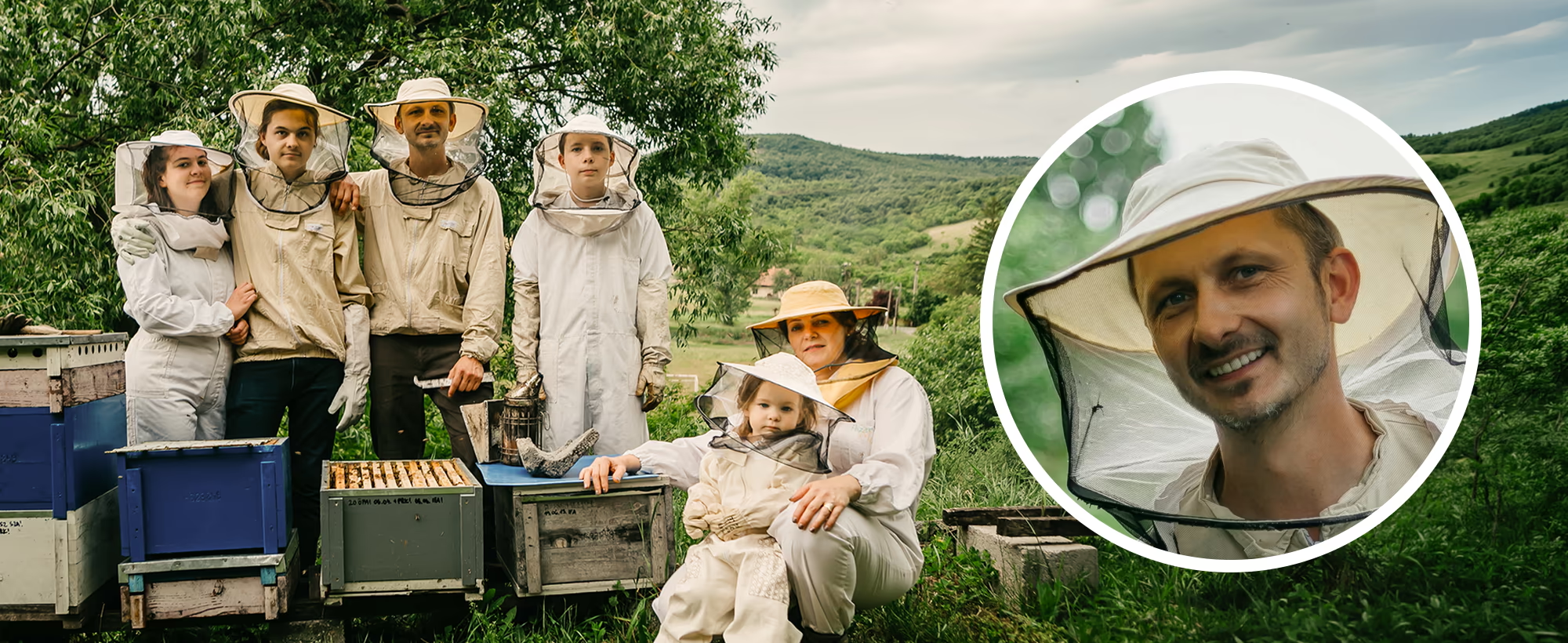
In the Hungarian municipality of Kozárd in the county of Nógrád, Márk Hizsnyai operates his family beekeeping business with 780 bee colonies, now in its fifth generation. What began at a young age by his father’s side has today become a life’s mission for him. His tradition-rich beekeeping operation is one of our selected partners for honey harvesting.